
| UQDF Clock Drift Poor timestamping makes it hard to find problems |
Back to Main Research Page  |
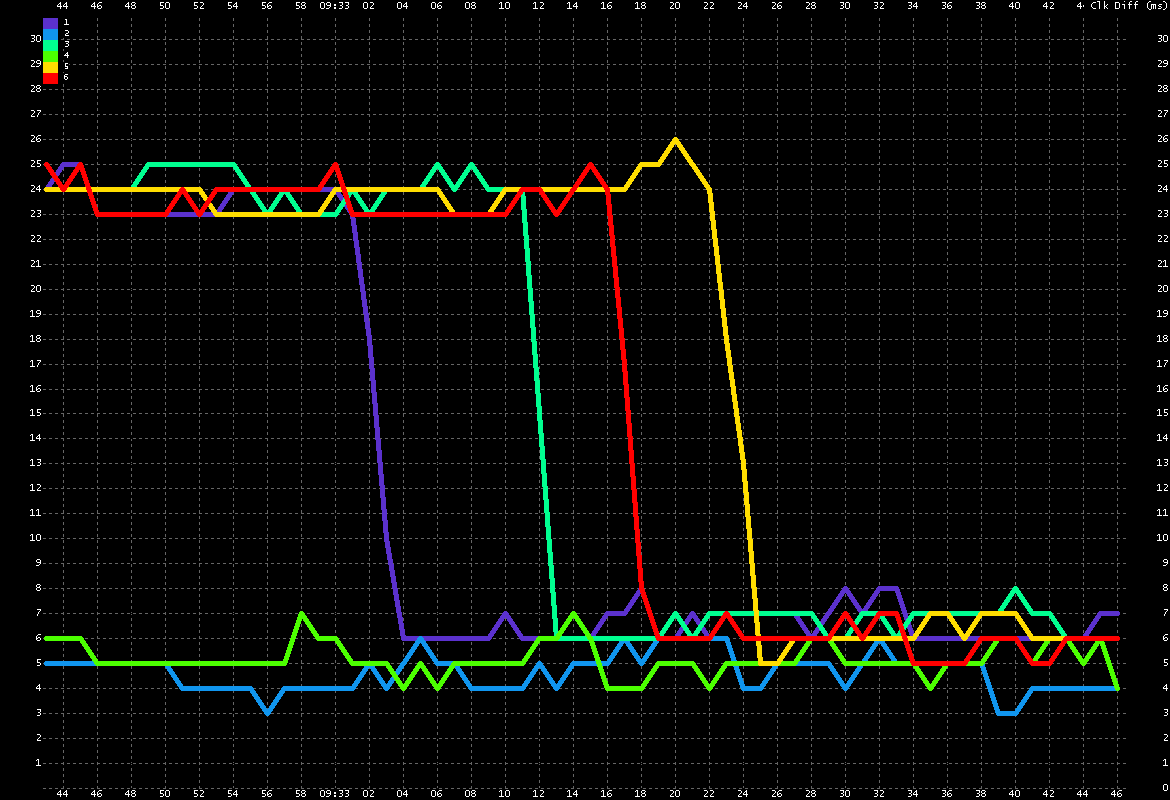
| We took a look at the timestamp differences between the 6 multicast lines that distribute UQDF, which is the SIP for Nasdaq listed stocks. We were surprised to see differences and time jumps of 16,000 microseconds, especially after considering how often equity quotes last less than 100 microseconds, and how some exchanges talk about nanosecond timestamps. Expressed in nanoseconds, UQDF’s clock drifts up to 16 million nanoseconds! Using nanosecond timestamps from a clock with a resolution of about 16 milliseconds would be as ridiculous as using a car speedometer in an X-15.
There is no technical reason why UQDF timestamps have such abysmal accuracy. Poor timestamps greatly increase a regulators job in piecing together what happened during an event, such as the recently discovered 15:50:00 event. |
| The chart below shows the relative timestamp differences between the 6 UQDF multicast lines for Nov 30, 2011 between 9:30 and 11:00. Horizontal scale shows the time of day (Eastern Standard Time). Vertical Scale is in milliseconds (there are 1,000 microseconds and 1 million nanoseconds in a millisecond).
Note the sudden change for lines 1, 3, 5, and 6 near the open, and also how line 4 (green) drifts and suddenly corrects itself. This type of behavior is what you would expect from the standard NTP protocol. We truly hope that more effort and consideration was put into securing an accurate clock which ends up serving as a reference for billions of dollars of financial transactions. But the evidence below says otherwise. |
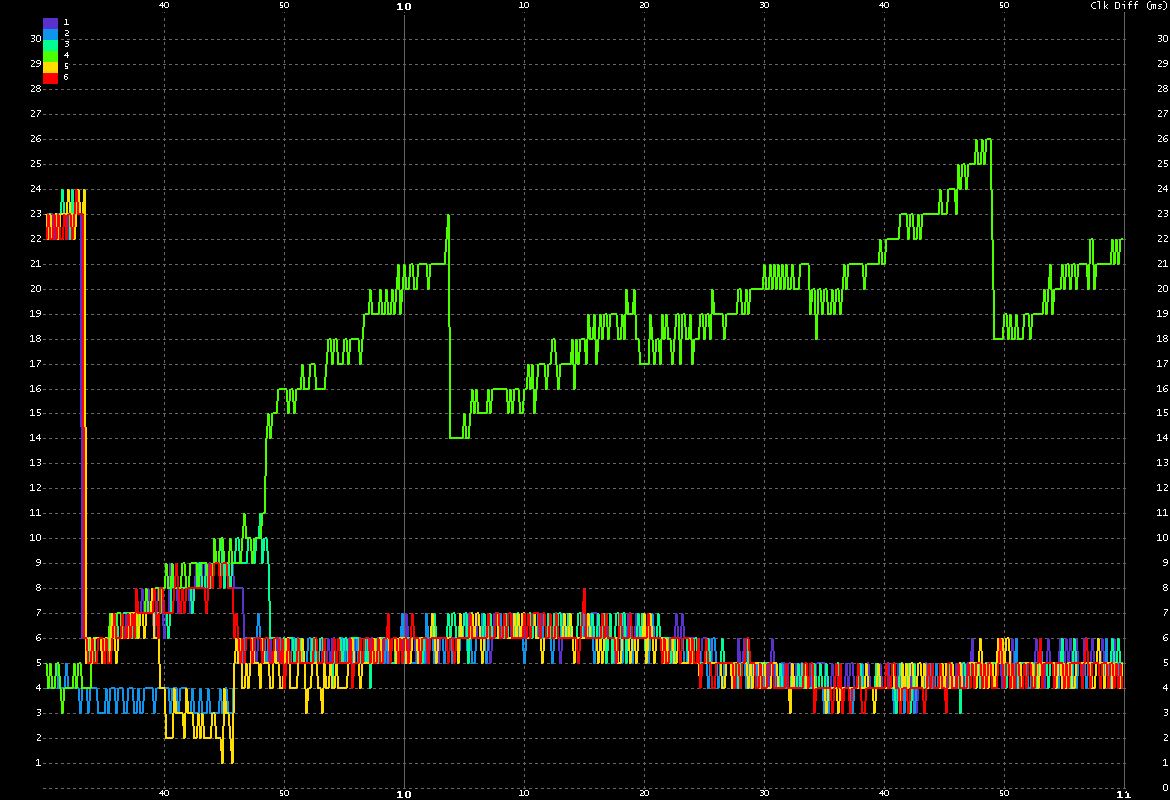
A close-up of the opening time period.