
| CQS Delays
|
| We have been monitoring CQS traffic on a 1-ms interval for the past few months. There is overwhelming evidence that significant saturation is frequently occurring (hundreds of times each trading day). We have never found more than about 750-800 quotes with the same CQS millisecond timestamp. The projected CQS capacity is currently stated as 750,000 quotes/sec (which is 750 quotes/millisecond). Each of the 12 individual CQS lines have a capacity of 75,000 quotes/sec (or 75 per millisecond). It seems that whenever there are about 750 quotes in one millisecond, the bandwidth pattern changes from clean spikes, to one showing a characteristic saturation pattern.
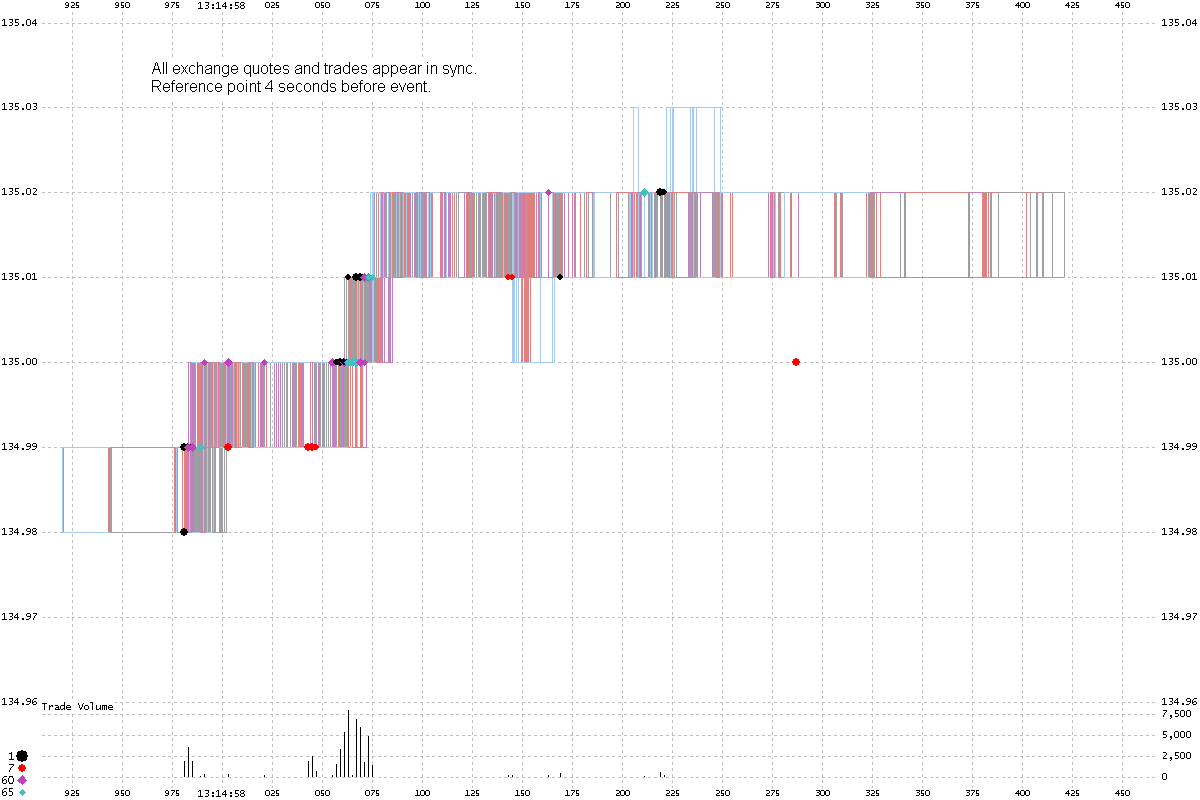
We developed a method to measure or test for latency: compare the timestamps and prices of trades and quotes for a single active symbol during one of these latency events. We chose SPY between 13:14:58 and 13:15:04 on May 12, 2011. We found that at the beginning of this period, there was active trading (but not saturating) and the CQS timestamps/prices (quotes) match the CTS timestamps/prices (trades) for all exchanges that were active in SPY at the time. Four seconds later, beginning at approximately 13:15:02.390, the NBBO for SPY locked, and 10ms later, it crossed. This was also the beginning of noticeable synchronization issues between individual exchanges with each other, and issues between one exchanges quotes and it’s trades. Several exchanges had trade messages that were 10+ milliseconds ahead of their own quotes. Some exchanges remained synchronous. And yet the BBO selected by CQS does not appear to take the time the quote is received into consideration when selecting the best bid/offer. Furthermore these problems all begin within 10 ms of CQS bandwidth hitting the magic number of 750-800 quotes in 1 ms. We think that the capacity limit, currently at 750,000/second needs to be raised about 3x (to 2.25 million/second) to avoid these problems based on current trading activity. (see our previous research on Equity Quote Saturation) |